

Aum
Dear Beautiful People,
Today, let us explore the archetype of KARNA, one of the two virtually invincible superheroes of the Mahabharata, the other being Bhishma. However, instead of viewing him through a modern psychological lens, let us understand Karna from a spiritual perspective, as the Rishis intended, as a profound symbol in the ego’s journey from bondage to liberation. Karna’s life is not merely a tale of misfortune, but a mirror reflecting the consequences of clinging to identity, pride, and pain over truth, surrender, and dharma.
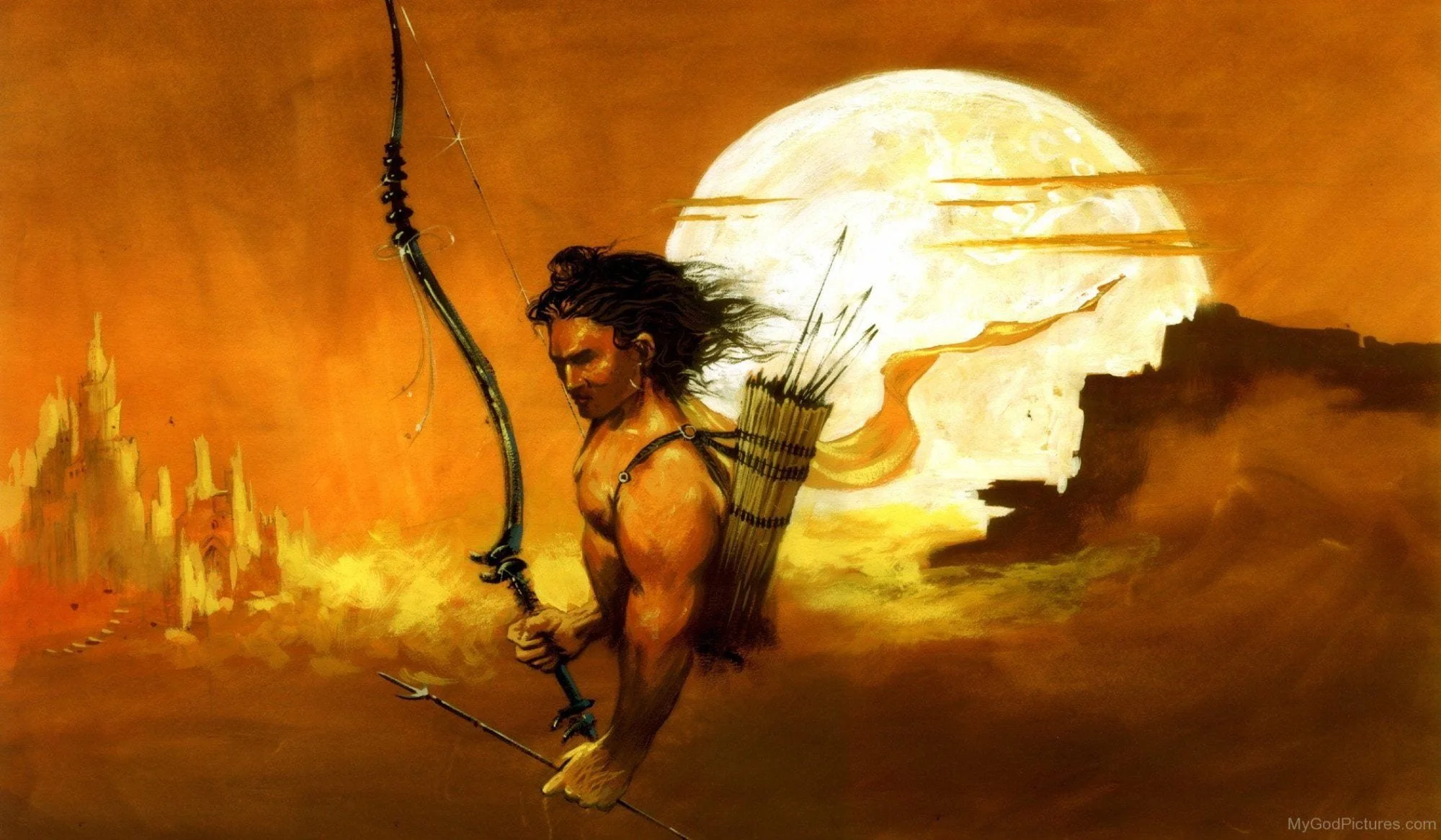
In today’s world, where storytelling often glorifies the underdog, Karna, the misunderstood hero from the Mahabharata has become a favorite. If you were to ask a modern audience to choose between Arjuna and Karna, many would choose Karna, moved by his tragic life story and perceived loyalty. But the spiritual and symbolic lens through which the Mahabharata is meant to be understood paints a very different picture, one that serves as a mirror to our own inner journey, especially the drama of the ego.
Karna: The Ego Born of Disconnection
The name Karna means “ear” or “that which is heard.” Symbolically, Karna represents the ego that constantly seeks to “be heard” — to be validated, acknowledged, and comforted in its sense of abandonment, rejection, and isolation. His origin itself is a metaphor: born with divine potential (as the son of Surya, the Sun God), but abandoned at birth and raised without knowledge of his true identity. Karna can also be seen as a compound of ‘Ka’ (happiness or joy) and ‘Runa’ (debt or borrowed), symbolizing “borrowed pleasures” - a life driven by external validations and fleeting joys. The ego, like Karna, subsists not on the inner bliss of the Self (Ananda) but on the unstable gratification borrowed from the world.
Karna, crowned Angaraj (Lord of the body) by Duryodhana, who himself embodies unchecked ego, symbolizes the egoistic intelligence that rules over the body and mind but remains disconnected from the guidance of the Atma (soul). In the spiritual journey, ego may wear the crown, but it can never inherit the kingdom of truth.
This is the story of the human ego, a divine soul that forgets its origin and seeks belonging in all the wrong places, often allying with the very forces that keep it in bondage.
Wounded Hero or Wounded Ego?
Karna is portrayed as charitable, brave, loyal, and talented, all qualities that stir admiration. However, the Mahabharata is not a simple story of good versus bad - it's a nuanced psychological and spiritual exploration of dharma, adharma, and the inner forces that shape us. When seen through this lens:
Karna’s loyalty to Duryodhana , while culturally admired, reflects misplaced allegiance. He pledges eternal loyalty not out of pure gratitude, but from a deep desire for status, validation, and revenge. It is the classic case of the ego selling its soul to the world for power and acceptance.
His silence during Draupadi’s humiliation and active role in Abhimanyu’s unfair killing expose his moral compromise. These acts are not accidents, they are what happen when the ego, blinded by its story of injustice, chooses reactivity over righteousness.
Karna justifies his wrongdoings by citing his pain and trauma. He clings to a victim mindset, using it as a shield for choices that go against dharma.
In contrast, consider Krishna, the Pandavas, and especially Yudhishthira, all of whom endured immense injustices without succumbing to bitterness or compromise. Their choices were not perfect, but they were guided by an internal compass aligned to dharma, not resentment.
The Ego’s Refusal to Surrender to Truth
Perhaps the most telling moment is when Karna is told by Krishna and Kunti that he is the eldest Pandava, born of royal and divine blood. This was his chance to realign with the truth, not just his lineage, but dharma itself (Pandavas symbolize the higher truth within us).
But Karna refuses. Why?
Because the ego would rather die clutching its grievances and pride than surrender to the truth that would dissolve its very identity. Karna’s refusal is not heroic. It is tragic. It is the ego’s final resistance to transformation.
Misunderstood Loyalty and the Bhishma Paradox
Another often-overlooked incident is Karna’s decision to not fight in the war as long as Bhishma was the commander, because Bhishma refused to recognize him as a worthy warrior. Though Karna vowed unwavering loyalty to Duryodhana, he abandoned him at the most critical moment, fully aware that Bhīṣma had the boon of “Ichha Mṛtyu” (death at will), and thus might never fall in battle and thus denying the very support he had promised. His ego took precedence over his vow.
This contradiction exposes how the ego’s allegiance is only as strong as its pride is unhurt.When wounded, even the greatest promises are bent to accommodate inner insecurity.
The Spiritual Consequences of Falsehood
Karna’s downfall begins much earlier when he lies to his guru Parashurama about his Varna / caste. In the Vedic tradition, this is not just a minor deceit but a serious breach of dharma. This behaviour highlights the inner dishonesty that inevitably brings consequences. At the moment he needs his knowledge the most (during the ultimate war) he forgets it. This is the karmic fruit of inner falsehood.
Unlike Arjuna, Karna never once seeks counsel from the elders, never reflects on his alignment to dharma, and never humbles himself in the face of Truth. He appeals to our modern sense of rebellion and pride, but in the spiritual path, pride is the greatest obstacle.
Why We Love Karna: The Mirror Effect
We admire Karna because he reflects the wounded ego in us all - the part that feels unloved, unseen, and victimized by life. He is the part of us that wants to believe we are noble and right, even when we compromise truth. He is the archetype of “If only the world had treated me better, I would’ve been great.”
But that archetype is not the path to liberation.
Conclusion: Don’t Be Karna. Learn From Him
Karna’s life is a cautionary tale, not a model to emulate. Valor without discernment, loyalty without dharma, and talent without humility will not lead to fulfillment. He had all the gifts, but the refusal to surrender to truth and to let go of his wounds led to his downfall.
Arjuna (from the root Arjava meaning straightforwardness and sincerity), is the true hero of the Mahabharata not because he was flawless, but because he was humble enough to seek guidance and courageous enough to follow it. Whether taking on the role of the eunuch Brihannala in exile or collapsing in vulnerability before Krishna on the battlefield, Arjuna consistently subordinated ego to dharma, a rare trait that made him the worthy recipient of the Bhagavad Gita and the archetype as the seeker on the path of truth. Both Bhishma and Karna were virtually invincible warriors - they could not be defeated in direct combat and had to be brought down through extenuating circumstances, symbolic of how deeply entrenched ego and attachment must be dismantled not by force, but through strategy, grace, and inner insight.
In the end, Arjuna represents the purified ego aligned with divine will. He surrenders, seeks guidance, reflects, and corrects his course — which is why Krishna (the supreme intelligence) becomes his charioteer.
Karna rides alone.
Reflect on that metaphor.
As you reflect on Karna’s story, take a moment to gently examine how the Karna within you shows up:
Where in my life am I seeking external validation to compensate for an inner sense of abandonment or unworthiness?
Have I ever mistaken loyalty to a person or cause for true allegiance to dharma?
In what situations do I justify harmful choices by clinging to my past pain or victim story?
Am I carrying any hidden pride in my suffering or struggle that prevents me from receiving guidance or realigning with truth?
Do I equate stubbornness with strength, or pride with self-respect?
Have I ever refused support, love, or help because it came “too late” thereby choosing resentment over reconciliation?
What "borrowed pleasures" (Karna = Ka + Runa) am I clinging to that are delaying my journey toward true inner fulfillment?
Am I willing to bow to inner truth even if it means giving up an identity I’ve built around pain, competence, or being misunderstood?
The path of dharma invites us not to reject these tendencies, but to mindfully witness and transcend them, aligning with the deeper truth of who we really are.
Wishing you Love and Light
Your Partner in Positive Change,
Nivedita
